
A real fishing guide to Watauga Lake
A working guide to fishing Watauga Lake — species, seasons, where to launch, what to throw, and which guides our guests have rated highly.
By Bill · April 18, 2026
On this page
I’ve been fishing this lake for fifteen years. This is the guide I’d hand a friend who was coming down for the first time and wanted to actually catch something.
Start with the species
Watauga Lake holds an unusual mix of warm-water and cold-water species. The depth (265 feet at its deepest) and the cold inflow from the Watauga and Elk rivers keep the lower water layers cool enough to support trout year-round, while the surface and the coves stay warm enough for bass to do their thing. Most reservoirs in the southern US are one or the other. Watauga is both.
The lineup, in rough order of how often people come specifically to catch them:
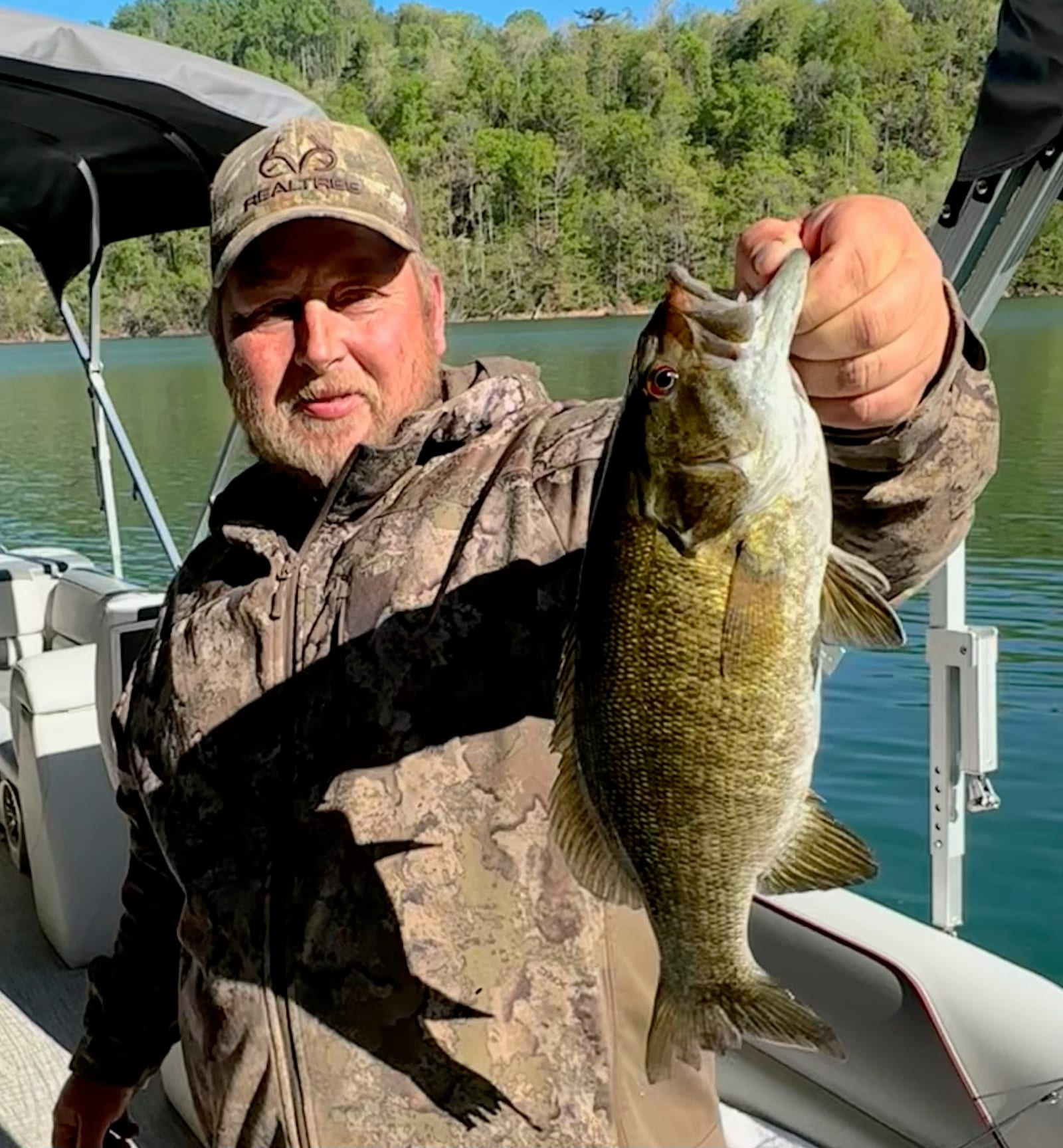
Smallmouth bass. The trophy. Lives on rocky points, submerged humps, and bluff walls. Best in late April through May (pre-spawn) and October (fall feed). Average size runs 14 to 18 inches; trophy fish into the 5-pound range exist and aren’t rare.
Largemouth bass. Less famous on this lake than smallmouth but plentiful. Lives in the back of coves, around dock pilings, and in shallow cover. Best in May (post-spawn) and September.
Walleye. A serious fishery that locals know about and visitors usually don’t. Trolled deep in summer with worm harnesses or crankbaits along the main channel. Jigged in winter near deep structure. Tennessee record walleye for this region have come out of Watauga.
Rainbow trout. Stocked by TWRA. The lake holds them year-round in cold deep water. Best fished by trolling with downriggers in summer or fly-fishing the tailwater below the dam in spring. The dam itself is worth seeing — the Appalachian Trail crosses the top.
Brown trout. Naturally reproducing in the river system feeding the lake. The dam’s tailwater is the most famous brown trout fishery in this part of the state.
Crappie. Spring and fall around brush piles, dock pilings, and submerged timber. Lower numbers than some lakes but the ones you catch tend to be bigger.
Bluegill. Plentiful and easy. The afternoon-with-kids fish. Anchor in any cove with a bobber and a worm.
Where to launch
Three real options, depending on what you’re doing:
The Watauga Lake public boat launch on the south side of the lake is free, paved, and the most convenient to the townhouse rentals on the hilltop. Five minutes from us. The ramp is good for everything from bass boats to small pontoons. If you’re bringing your own kayak instead of a powerboat, see our public kayak and paddleboard launch guide for the quieter access points.
Fish Springs Marina (15 minutes) has live bait, fuel, slip rentals, and pontoon and fishing boat rentals. They’re the better choice if you forgot something or want a guide-style trip. For more on what’s available, see our boat rental guide.
Lakeshore Resort & Marina (20 minutes) is bigger, with more slips, more rentals, and a campground. Best if you’re staying multiple days and want a slip.
When to fish what
Late March through April. Cold water, pre-spawn bite. Smallmouth move up onto rocky points to feed before spawning. Slow-roll a 3-inch swimbait on a jig head, fished close to the bottom. Drag a tube jig along rocky banks. Water’s still in the 50s; finesse beats power.
May. Spawn and post-spawn. Smallmouth move shallow. Topwater patterns work in low light — a Whopper Plopper or a Spook around rocky points at dawn. Largemouth move into the back of coves. This is when the fishing is best of the year, by a wide margin.
June and July. The honeymoon ends. Water warms up, fish go deep. Smallmouth move out to 15–25 feet on the points. Drop-shot a worm or fish a Carolina rig. Walleye fishing kicks in — start trolling worm harnesses behind a bottom bouncer along the main channel.
August. The hardest fishing of the year. Heat pushes everything deep. Fish very early (5–8 AM) or very late (last hour of light). Topwater can still work in low light. Otherwise it’s deep finesse.
September. Fall transition. Bass start to come back up as water cools. This is when fishing-per-hour shoots back up. Spinnerbaits, swimbaits, crankbaits along the rocky banks. Walleye stays deep but more aggressive.
October. Peak fall fishing. Bass feed hard before winter. Foliage peaks mid-month — you’re fishing under a forest that’s red and orange in every direction. Topwaters work again as water cools. This is also when most fishing photos happen.
November and December. Cold-water bite. Slower but rewarding. Smallmouth go to 20–40 feet on points; fish a Damiki rig or a hair jig vertically. Brown trout move up in the tailwater below the dam. The lake itself is nearly empty of recreational boats.
January and February. The fewest fish and the fewest fishermen. If you go, you’ll have whole coves to yourself. Drop a jigging spoon over deep structure for smallmouth. Tailwater trout fishing below the dam is at its best — dress for it.
The basics of regulations
You need a Tennessee fishing license if you’re 13 or older. A Trout Permit is a separate add-on required to keep trout. Buy online at tn.gov/twra or in person at Watauga Lake Mercantile or any sporting goods store in the region.
Current bag and size limits:
- Black bass (largemouth and smallmouth combined): 5 fish per day, 14-inch minimum
- Walleye: 5 fish per day, 16-inch minimum
- Trout: 7 fish per day total, no length limit on rainbows
- Crappie: 15 fish per day, 10-inch minimum
These change. Check the TWRA website before your trip.
Rentals and guides
If you don’t have a boat, both Fish Springs and Lakeshore Marina rent pontoons (great for families) and fishing boats (better for serious anglers). Expect about $200 for a half-day on a fishing skiff or $400 for a full-day pontoon. Reserve ahead of time in summer.
If you want a guide, several local captains specialize in different fisheries — there’s one who’s particularly good on smallmouth, one who runs trout trips year-round, and a couple who focus on bass tournaments. We don’t list them by name on this page because the rotation changes. Message us and we’ll match you with the right guide for what you want to target.
A practical first trip
If you have one day on the lake and want to try real fishing:
- Buy your license the night before at tn.gov/twra. Print or save the PDF to your phone.
- Be at the boat launch by 6 AM in summer, 7 AM in the cooler months. The dawn bite matters more here than in many fisheries.
- Start on rocky points near the dam or in the main lake. Smallmouth live on structure; they’re rarely in open water.
- Bring two rods — one set up for fast (a topwater or a moving bait) and one for slow (a soft plastic on a jig head).
- Eat lunch on land. Either at Captain’s Table at Watauga Lakeshore Marina (if it’s open — call to confirm), or back at the townhouse with sandwiches from Watauga Lake Mercantile. Wait out the heat.
- Fish again from 5 PM until dark. Last light is often the best bite of the day in summer.
- Back at the townhouse by 9 PM with a few photos and the jet tub running.
That’s what most of our fishing guests do. It works.
Want to stay at the lake?
Our modern two-bedroom townhouse has sweeping lake and mountain views, a jet tub, and a gas fire pit on the back porch.
Common questions
Do I need a Tennessee fishing license?
What's the most-targeted species?
Are there guides on the lake?
More like this
Keep reading
Watauga Lake water temperature by month, with swim and fishing windows
Surface water temperatures at Watauga Lake by month, when the swim season actually starts and ends,
Fishing tournaments at Watauga Lake
A guide to fishing tournaments at Watauga Lake. The 2025 Bassmaster College Classic, what to expect
Fishing on Watauga Lake
A 6,430-acre reservoir with bass, walleye, trout, and crappie, and the kind of clean cold water that holds them through summer.
Cherokee National Forest from Watauga Lake
Watauga Lake sits inside the Cherokee National Forest, which is most of why the shoreline is undeveloped and the water is so clear.