
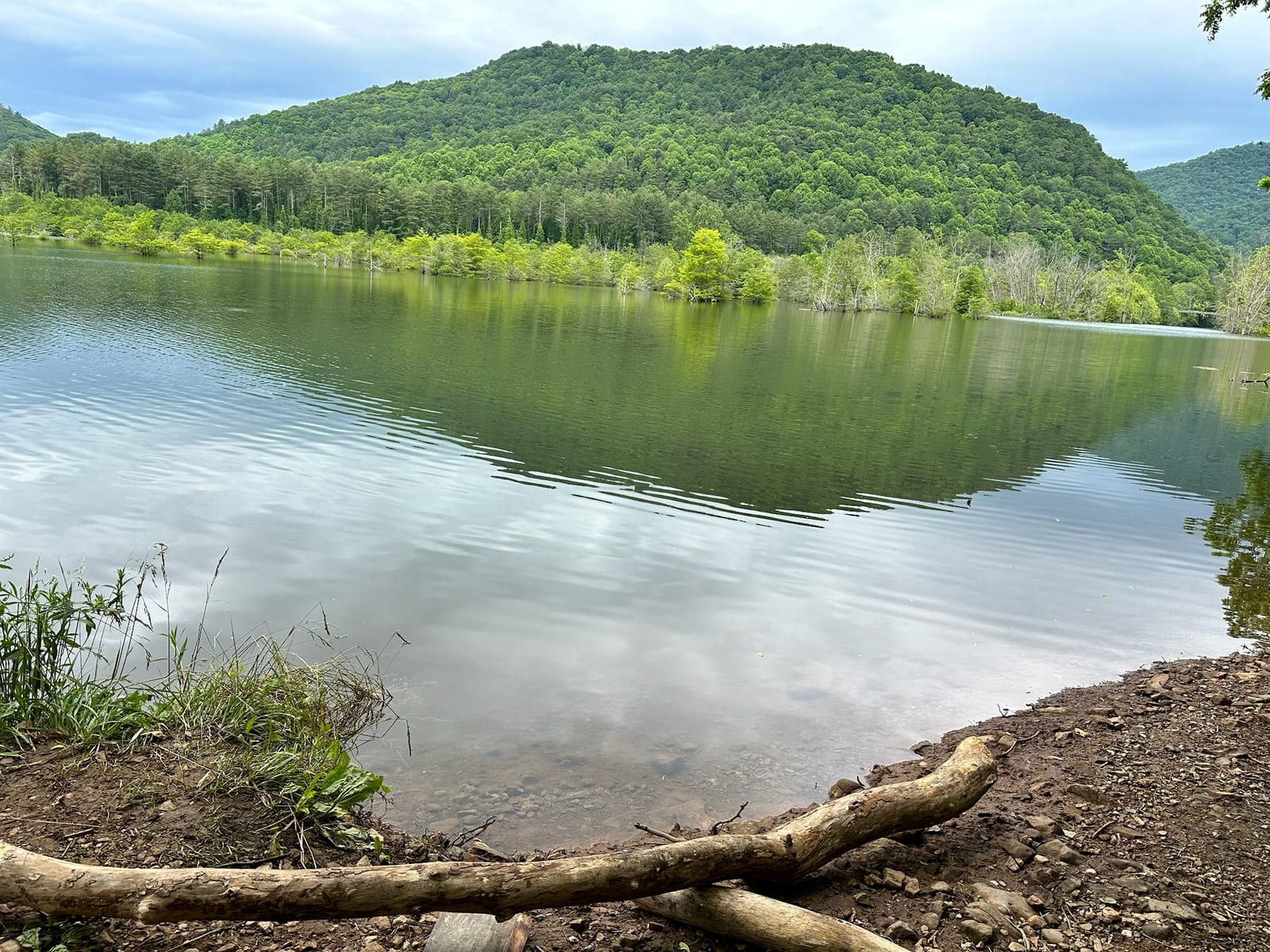
Public kayak and paddleboard launches on Watauga Lake
Where to put in your own kayak, canoe, or paddleboard on Watauga Lake — public ramps, quiet coves, parking, wind notes, and the launches locals actually use.
By Karen & Bill · May 24, 2026
On this page
You’re bringing your own kayak or paddleboard, you’re staying somewhere on the lake, and you want to know where to put in without paying a marina day-use fee. This is the article we wish existed when we first moved up here.
Watauga Lake is shaped like a long shallow boomerang, with the dam end in the east and the upper end running northwest toward Butler and the small bridges. Most of the boat ramps, marinas, and busy recreation areas cluster around the dam-end basin where US-321 hugs the south shore. The upper end is quieter, slower, and much less developed. There are good launches in both sections, and the right launch depends on what kind of paddle day you want.
The two main public launches
These are the TVA-managed sites that everyone uses and that show up on maps.
Shook Branch Recreation Area (south shore, dam end)
This is the busiest and most convenient public access point on the lake. It’s a TVA recreation area off US-321 between Hampton and the dam, with a paved parking lot, a developed swim beach, picnic tables, vault toilets in season, and a kayak-friendly carry-down beach next to the boat ramp.
The motorized boat ramp is busy on summer weekends — pickup trucks with bass-boat trailers backing in and out — so the carry-down spot for kayaks and SUPs is the small pebbled beach immediately east of the ramp, not the ramp itself. You can put in there without being in anyone’s way. Parking is free, and on a weekday morning you’ll often have the place to yourself.
The water off Shook Branch opens directly onto the main channel and gives you a lot of options:
- East along the south shore toward the dam (about 3.5 miles of shoreline paddling, with the Watauga Dam AT crossing visible from the water in the last stretch)
- West along the south shore toward Watauga Lake Trail
- North across the channel toward the Watauga Point shoreline
- Northwest toward the upper-lake bridges (a long paddle, 6-plus miles one way, only attempt on a calm day)
Shook Branch is also where the public swim beach sits, so there’s a marked swim zone you can’t paddle into during summer. Easy to avoid; just stay outside the buoyed line on the east side of the ramp.
Watauga Point Recreation Area (north shore, dam end)
The lower-profile sister to Shook Branch. TVA-managed, smaller, on the north shore at the end of a road off Old Highway 67. The launch is a gentle gravel ramp with carry-down access; bathrooms are pit toilets in season; parking is free and rarely full.
Watauga Point sees mainly local traffic and is genuinely peaceful most mornings. It’s our pick when we want to put in close to the dam without the Shook Branch crowd. The cove on the east side of the launch is shallow, calm, and good for kids learning to paddle. Heading west from Watauga Point puts you into open water heading toward the upper lake.
The smaller, less-known launches
These are the launches locals use. They aren’t all signed and a couple require a short carry from where you can park.
Sink Mountain area (upper lake, south side)
The forest road that runs along the south shore of the upper lake passes several informal pull-offs with short carry-down trails to the water. The Sink Mountain section is the prettiest stretch — quiet coves under the Sink Mountain ridge, very little motorboat traffic, calm water most mornings. Park well off the road. The trails are short (under 100 feet from the car to the water in most spots) but a little steep. Best for kayaks; harder for paddleboards because of the carry.
Pioneer Landing (upper lake, north side)
A small public launch at the end of Pioneer Landing Road on the north shore of the upper lake. Gravel ramp, a few parking spots, no facilities. The water is shallow here and the surrounding bays are protected from wind by the surrounding hills. This is a real morning-glass-water spot. It’s also a good launch for paddling the Watauga River channel above the lake, which is a slow-moving stretch that feels more like a winding river than a reservoir.
Lakeshore Resort and Watauga Lake Marina (south shore)
These are private marinas, not public launches. Both will sometimes let you use their ramps for a small day-use fee if you ask politely and you’re putting in a kayak or SUP rather than a boat trailer. Worth knowing if Shook Branch is crowded on a holiday weekend. Call ahead, fees vary, and don’t show up assuming yes.
Wilbur Dam Road end (near the dam)
There’s a small turnout at the very east end of Wilbur Dam Road, near the dam itself, where a footpath leads down to the water below the dam. This is not a kayak launch. It’s a fishing path on the river side of the dam, not the lake. We mention it because it shows up on some maps as “boat access” and people get confused. The water below the dam is cold, fast, and not for casual paddling.
Picking a launch by what you want from the day
A practical framework:
For a calm morning paddle with kids: Watauga Point. Smaller, easier, the east cove is shallow and protected.
For a longer shoreline paddle with mountain views: Shook Branch, heading east toward the dam. You get the dramatic 331-foot dam face from a perspective most people never see, and the south shore is shaded by ridgeline in the morning so you stay cool.
For quiet, near-zero motorboat traffic: Sink Mountain or Pioneer Landing. Upper lake, less developed, fewer rentals.
For a sunset paddle: Watauga Point. The north shore looks west toward the sun, and the dam-end basin gets the warmest reflected light. The cove on the east of the launch makes for an easy paddle back at dusk if the wind has picked up.
For a workout: Cross the main channel from Shook Branch and paddle west along the north shore. About 4 miles round trip, all in open water, with no obstacles.
Wind, water, and timing
Watauga Lake is a mountain valley reservoir, which means the wind patterns are predictable and worth paying attention to.
The morning is almost always calmer than the afternoon. The valley cools overnight and the air sits still on the water at sunrise. By mid-morning, the sun heats the south-facing slopes, the air starts moving up the hillsides, and a steady west-to-east wind develops down the length of the lake. By 2 PM on a sunny summer day, the lower basin can have whitecaps and the upper basin will have steady 10-15 mph wind.
The upper lake stays calmer than the lower basin even in afternoon wind because the surrounding hills are closer and the open fetch is shorter. If you’re set on an afternoon paddle, put in at Pioneer Landing or Sink Mountain rather than Shook Branch.
Thunderstorms in this part of east Tennessee build in late afternoon, typically between 3 and 7 PM in summer. Watauga Lake is deep, cold, and surrounded by tall ridges — not a lake to be caught out on in a storm. Check the forecast in the morning and plan to be off the water by 2 PM on days with afternoon thunder in the forecast. If a storm builds while you’re out, head to the nearest shore and wait it out — don’t try to paddle across open water in lightning.
Water temperature matters more than people expect. Watauga is a deep reservoir fed by cold mountain streams. Surface water doesn’t get genuinely warm until late June, and even in August the lake is noticeably cooler than the Tennessee summer suggests. If you flip your kayak in May or early June, you will be cold fast. Wear a PFD, carry a dry bag with a warm layer, and consider a wetsuit for early-season paddling. See our note on whether the lake is safe for swimming for the long version on water temperature.
Practical bring-along list
Things we tell guests to pack for a paddle day on Watauga:
- PFD — required by Tennessee law for any vessel, including paddleboards.
- Whistle — required on any vessel, attached to the PFD.
- Dry bag with a phone, snacks, sunscreen, and a warm layer.
- Water bottle with twice what you think you’ll drink. The reflected light off the lake is dehydrating.
- A hat that won’t blow off. A baseball cap with a chin strap or a brimmed sun hat with a clip.
- Polarized sunglasses. Cuts the glare and lets you see fish under the boat.
- Sunscreen and reapplication. The light off the water doubles your sun exposure.
- A small towel. For drying off after a swim break or wiping splashed water off gear.
If you’re putting in early, a thermos of coffee is the locals’ move. Watching the sun come up over the dam end of the lake from a kayak at 7 AM with coffee is one of the better experiences in this region.
A note on motorized traffic
The dam-end basin sees real motorboat traffic on summer weekends — pontoons, bass boats, ski boats, the occasional jet ski. This isn’t Lake Cumberland or Lake of the Ozarks levels of wake, but it’s not a glassy mountain pond either. Kayakers and paddleboarders should:
- Stay close to shore on busy afternoons.
- Cross the channel quickly when crossing rather than paddling along it.
- Wear a brightly colored PFD or shirt — easier for boaters to see.
- Listen for engines behind you. A bass boat at 40 mph from upwind doesn’t telegraph itself until it’s already passing.
The upper lake is much quieter. Weekday mornings anywhere on the lake are quiet. Saturday afternoons at the dam end are the high-traffic exception, and even those are nothing close to a typical busy reservoir elsewhere.
What we’ve found over a couple of years on this water
We’re not lifelong paddlers. We came to Watauga as Florida transplants and learned the lake by putting in at a different ramp every weekend for a year. The pattern we keep coming back to: Watauga Point at sunrise, lower basin shoreline paddle, off the water by 11. It’s the most reliably beautiful version of a paddle day here. The water is glass. The light is warm and low. The motorboats haven’t started. Mist sometimes rises off the upper coves. You see otters, kingfishers, the occasional bald eagle.
Whatever launch you pick, we hope you get a morning like that.
For other ways onto the water — if you don’t have your own kayak — see our guide to renting a boat on Watauga Lake. For where to stay on the lake, our property page has the specifics on our place in Butler, which is a short drive from Pioneer Landing and Sink Mountain. The booking page has dates and details.
Want to stay at the lake?
Our modern two-bedroom townhouse has sweeping lake and mountain views, a jet tub, and a gas fire pit on the back porch.
Common questions
Are there public kayak launches on Watauga Lake?
Do you need a permit to kayak on Watauga Lake?
When is the lake calmest for paddling?
Are there quiet coves away from motorboat traffic?
Is paddleboarding safe on Watauga Lake?
More like this
Keep reading
Renting a boat on Watauga Lake — pontoons, prices, what to know
A guide to renting a pontoon, ski boat, kayak, or SUP on Watauga Lake. Which marinas rent, what it c
Is Watauga Lake safe for swimming?
A practical safety guide for swimming at Watauga Lake. Water quality, beach conditions, wildlife to
Twenty-four hours at Watauga Lake
An hour-by-hour itinerary for a single overnight at Watauga Lake. What to skip, what to actually do,
Cherokee National Forest from Watauga Lake
Watauga Lake sits inside the Cherokee National Forest, which is most of why the shoreline is undeveloped and the water is so clear.