
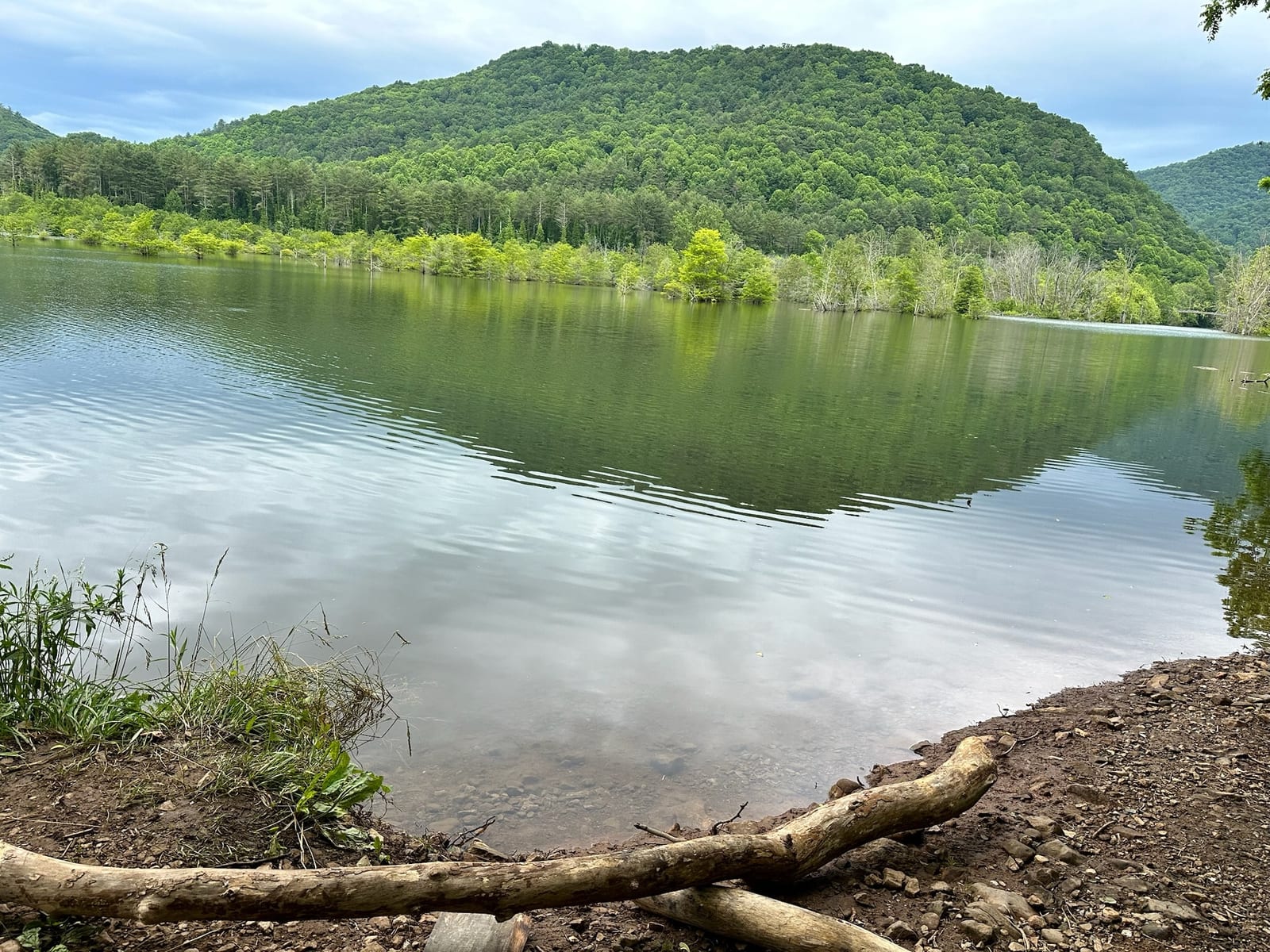
Watauga Lake water temperature by month, with swim and fishing windows
Surface water temperatures at Watauga Lake by month, when the swim season actually starts and ends, and how temperature drives bass and trout behavior.
By Bill · May 19, 2026
On this page
Water temperature is the question we get more than any other one about the lake itself. Can the kids swim in May? Is it too cold to wakeboard in October? When do the bass start biting?
Here is what we have learned in our years on this lake, with numbers backed against TVA reservoir data and TWRA seasonal patterns.
Watauga Lake monthly water temperature
Surface temperatures, typical year. Reservoirs vary from year to year, so use these as a guide and check TVA’s current reservoir page near your trip if you need to dial in.
| Month | Surface temp (low) | Surface temp (high) | What you can do |
|---|---|---|---|
| January | 41°F | 44°F | Trout, walleye start staging |
| February | 41°F | 44°F | Walleye spawn often begins |
| March | 45°F | 52°F | Walleye spawn, trout fishing strong |
| April | 52°F | 60°F | Largemouth pre-spawn, trout |
| May | 60°F | 68°F | Smallmouth spawn late month, swim begins |
| June | 70°F | 76°F | Full swim, bass post-spawn |
| July | 76°F | 82°F | Peak swim, surface bass slow midday |
| August | 76°F | 82°F | Peak swim |
| September | 70°F | 76°F | Swim still works, fish move shallower again |
| October | 58°F | 66°F | Swim window closes, trout fishing improves |
| November | 48°F | 56°F | Cold-water species active |
| December | 43°F | 48°F | Lake fully turned over |
Why this lake stays cold for a southern reservoir
Watauga sits at 1,959 feet of elevation at full pool, the highest of all TVA lakes. The dam closed December 1, 1948 and created a reservoir 16.3 miles long, 6,430 acres, with a maximum depth of 265 feet and an average depth of 52.5 feet.
Two things make the water colder than a typical Tennessee reservoir at the same latitude:
- Elevation. Watauga is roughly 1,200 feet higher than Norris Lake or Cherokee Lake. That alone drops air and water temperatures a few degrees year-round.
- Depth. Average depth of 52.5 feet means a huge thermal mass. The lake takes weeks longer to warm in spring and weeks longer to cool in fall than a shallower reservoir.
The combination is why the lake fishes more like a North Carolina mountain reservoir than a typical Tennessee Valley lake.
The practical swim season
Swimmers and parents care about one number: when can the kids get in?
- Early May: surface temps in the upper 50s and low 60s. Cold for adults. Kids might wade.
- Memorial Day weekend: typically mid to upper 60s. Brisk but swimmable.
- Mid-June through Labor Day: mid-70s to low 80s at the surface. Full swim season.
- September: still in the 70s most of the month. Many of our guests swim into the third week.
- October 1: typically in the low 60s. Done for most people.
Shook Branch Recreation Area runs its official swim season May 11 through September 14, with the day-use fee of $2 per vehicle. That date range reflects the Forest Service’s reasonable window for lifeguard-able conditions. Outside that window the beach is still accessible. There just aren’t formal swim hours.
A note for parents: the public beach at Shook Branch has a gradual sandy entry and a buoyed swim area. The lake bottom drops off relatively quickly outside the swim area. If you have small kids, the swim area is the right place to be.
Thermal stratification — why the deep water feels cold even in August
Watauga stratifies in summer. By July a strong thermocline sits at roughly 25 to 40 feet down. Above the thermocline, the surface water is in the upper 70s to low 80s. Below it, the water stays in the upper 50s and low 60s.
What this means in practice:
- Jumping off a boat into 15 feet of water in July feels warm. You’re still above the thermocline.
- Diving deep on a swim feels cold fast. Your body crosses into the cold layer.
- Trout stay below the thermocline in summer. That’s why summer trout fishing means downriggers or trolling weights to get bait into the cold water.
- Bass move based on temperature, not just depth. Smallmouth in particular relate to the thermocline edge.
In fall the lake “turns over” as the surface cools and the thermal layers mix. By late October the water column is roughly the same temperature top to bottom. This is when fish behavior changes dramatically and everything in the lake feels active.
Fish spawning windows by temperature
We get fishing guests asking when to come for specific species. Spawning windows at Watauga, based on Tennessee Wildlife Resources Agency information and our own observation:
| Species | Spawn temp | Typical timing at Watauga |
|---|---|---|
| Walleye | 43-50°F | Late February through March |
| Largemouth bass | 60-65°F | Mid-May into June |
| Smallmouth bass | 60-63°F | Late May into early June |
| Crappie | 56-65°F | Late April into May |
| Bluegill | 67-80°F | June through August (multiple cycles) |
| Rainbow and brown trout | Stocked species, no significant natural reproduction | Fish year-round, peak cool-water months |
Walleye is the headliner spawn here. They run up the Watauga and Elk river arms when surface temps in the rivers hit the mid-40s. The Watauga River walleye run is one of the better cold-water bites in east Tennessee.
Smallmouth spawn around 60 to 63°F. That happens at the lake’s surface in late May to early June, and the post-spawn period through mid-June is the easiest smallmouth fishing of the year.
For a deeper breakdown of where, when, and how to fish, see our Watauga Lake fishing guide.
The winter — why it doesn’t freeze
Surface temperatures at Watauga bottom out in the low 40s in January and February. We’ve watched the surface read 41°F on multiple January mornings. The lake doesn’t freeze because:
- Average depth is 52.5 feet, max 265. Way too much thermal mass.
- The lake stays open even when nighttime air drops into single digits, which it does a few times per winter.
- Shallow coves at the very edges can ice over in a deep cold snap. The main lake stays liquid.
This makes Watauga a year-round eagle and waterfowl habitat. Bald eagles fish open water near the dam all winter and are easier to spot when the boat traffic is gone.
Source notes
The numbers in this guide come from:
- TVA Watauga Reservoir observation history (tva.com publishes daily reservoir levels and periodically reports surface water temperatures)
- TWRA species pages and reservoir management plans for spawning windows
- NOAA climate normals for Mountain City, TN (elevation 2,418 ft) and Elizabethton, TN (elevation 1,526 ft) for air temperature context
- Our own observations over multiple years of running a vacation rental on this lake and watching what the water actually does
For a current temperature reading before your trip, the TVA Watauga Reservoir page is the right source. They update reservoir observation data routinely and the surface temperature published there is more reliable than third-party forecast sites.
The host take
If you’re booking a trip and you care about the water, the rules are simple. Late June through mid-September for swimming. Late February through March for walleye. May through October for everything else. November through February for cold-weather fishing and quiet.
If you message us the week before your trip, we’ll tell you what the lake is actually doing. Numbers in a table are a guide. The real lake responds to whatever weather the last two weeks have brought.
Want to stay at the lake?
Our modern two-bedroom townhouse has sweeping lake and mountain views, a jet tub, and a gas fire pit on the back porch.
Common questions
When is Watauga Lake warm enough to swim?
How cold is the lake in winter?
What is the deepest water temperature in summer?
When do walleye spawn at Watauga?
When do smallmouth bass spawn?
Where do the temperature numbers come from?
More like this
Keep reading
The best time to visit Watauga Lake, month by month
A working guide to the best months to visit Watauga Lake for swimming, fishing, foliage, skiing, and
A real fishing guide to Watauga Lake
A working guide to fishing Watauga Lake — species, seasons, where to launch, what to throw, and whic
Is Watauga Lake safe for swimming?
A practical safety guide for swimming at Watauga Lake. Water quality, beach conditions, wildlife to
Watauga Lake weather and climate, with what to pack by season
Watauga Lake climate facts: elevation 1,959 ft, monthly temps, precipitation, snowfall, microclimate
Fishing on Watauga Lake
A 6,430-acre reservoir with bass, walleye, trout, and crappie, and the kind of clean cold water that holds them through summer.
Cherokee National Forest from Watauga Lake
Watauga Lake sits inside the Cherokee National Forest, which is most of why the shoreline is undeveloped and the water is so clear.