
Is Watauga Lake safe for swimming?
A practical safety guide for swimming at Watauga Lake. Water quality, beach conditions, wildlife to watch for, boat traffic, and what to know before you swim.
By Karen · May 19, 2026
On this page
We get the safety question often. Parents booking a family trip want to know what they’re walking into. The short answer: Watauga Lake is one of the safer southern reservoirs to swim in, and our family has been swimming here for years. There are still real things to know.
This is the practical version.
Water quality
The lake is clean by Tennessee reservoir standards. A few specifics that matter:
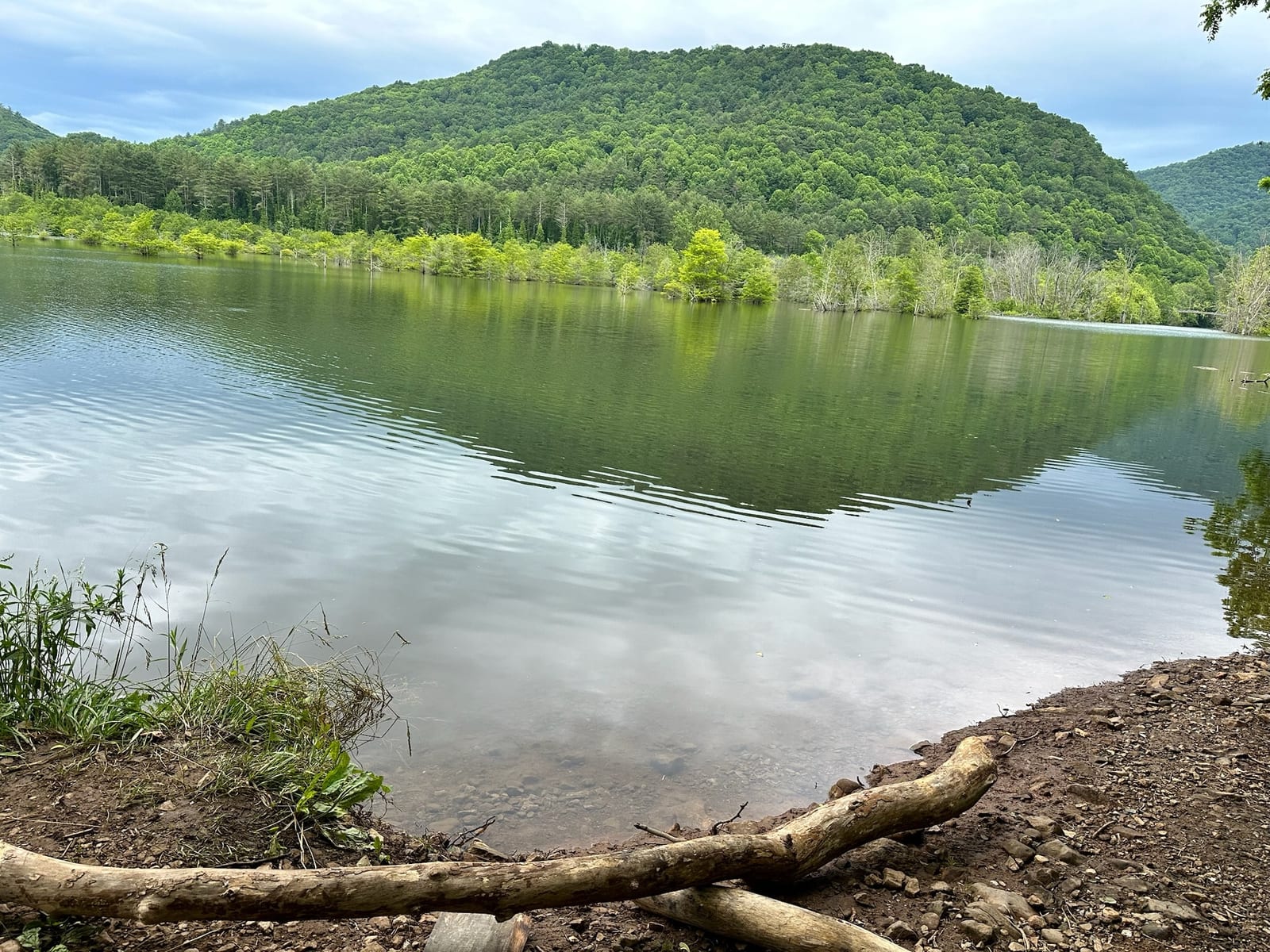
Limited shoreline development. More than half of Watauga’s 104.9 miles of shoreline sits inside the Cherokee National Forest and cannot be developed. The rest is a mix of residential, commercial marinas, and undeveloped private land. Compared to reservoirs ringed by neighborhoods and farms, Watauga has substantially less runoff pressure.
TVA reservoir monitoring. TVA tests Watauga periodically as part of its reservoir health program. The lake has consistently rated in the higher tier for Tennessee reservoirs. TVA’s Reservoir Health Assessment pages publish results when they’re updated.
No regular harmful algal bloom history. Some southern reservoirs see seasonal cyanobacteria blooms in late summer. Watauga has not had a documented history of significant harmful algal blooms. We’ve seen the lake develop a faint surface scum in still coves during very warm weeks in August, which usually clears on the next windy day. If anything looks visibly off in the water where you plan to swim, swim somewhere else.
Clear water. Visibility in summer is typically 8 to 15 feet. You can see the bottom in shallows and watch fish move near the swim beach. This is unusual for a southern reservoir and is one reason the lake feels different than typical TVA lakes downstream.
Cold deep water. Below about 30 to 40 feet, the lake stays in the 50s and 60s even in August. This holds dissolved oxygen and discourages the kind of bacterial activity that warm shallow lakes can develop in late summer.
The beaches and where to swim
The main public swim option is Shook Branch Recreation Area, run by the US Forest Service. Sandy beach, gradual entry, buoyed swim area, picnic tables, restrooms. The day-use fee is $2 per vehicle. The official swim season runs May 11 through September 14.
Other public lake access points include Watauga Point, Pioneer Landing, and several smaller Forest Service sites. Most don’t have lifeguards, designated swim beaches, or sandy entries. They’re better suited for kayak launches and shore fishing than for family swimming.
Private docks at lakefront rental homes are the most common swim spots for guests staying in lakefront properties. The water at the end of a typical dock is 10 to 25 feet deep depending on the cove. Kids should wear PFDs around docks until they’re confident swimmers. (Our townhouse is hilltop, not lakefront, so we send our guests to Shook Branch or the public access points.)
Wildlife to watch for
The Cherokee National Forest is one of the more biodiverse forests in the eastern US. That comes with critters.
Black bears. Resident in the forest around the lake. Bear sightings near our property happen a few times a year, usually in spring and late summer when they’re most active. Standard bear-country food storage rules apply: don’t leave food on the deck, in the car overnight at trailheads, or on the beach. Bears don’t approach the swim beach as a rule. They’re far more interested in your trash can than your kids.
Snakes. Two distinct populations matter here:
- Northern water snakes (non-venomous) are common around the shoreline. They look intimidating, especially when swimming with their head up, and are frequently misidentified as water moccasins. Water moccasins (cottonmouths) are not native to this elevation or this part of east Tennessee. The water snakes will bite if cornered or grabbed. Don’t grab them. Give them space and they’ll move along.
- Copperheads are present in the surrounding forest and rocky areas. They’re venomous but rarely encountered around swim beaches. Wear closed-toe shoes on rocky trails. Don’t reach into rock piles without looking.
Ticks. Real risk in this region from April through October. Lyme disease is endemic to east Tennessee. The Smokies and southern Appalachians have rising rates of tick-borne illness. Use DEET or permethrin-treated clothing for hikes. Do a tick check at the end of any day in the woods, especially around the waistline, ankles, and hairline.
Mosquitoes. Less of an issue than people expect, because the lake’s deep cold water doesn’t breed them. Dawn and dusk on still summer evenings you’ll want repellent for the porch, but you won’t be swarmed.
Eagles, ospreys, herons. Won’t bother you. Bring binoculars.
Currents, riptides, and boat traffic
Riptides: none. Watauga is a reservoir. The “rip current” risk that exists at ocean beaches does not exist here.
Currents: generally minimal in the main lake. The exception is near the dam when TVA is generating power and releasing water. That area is buoyed off and restricted. Recreational swimming and boating shouldn’t be happening there in the first place. The river arms (Watauga River and Elk River) can have light current during spring high-water periods.
Boat traffic is the genuine risk worth talking about. Watauga has no horsepower or speed limits, which means cigarette boats, ski boats, and houseboats share the same water as kayaks and paddleboards. On busy summer weekends, the main channel of the lake is not a safe place to swim outside a marked swim area.
Practical rules:
- Swim from established beaches with buoyed swim areas. Shook Branch is the obvious one.
- Swim from your dock, not from the main channel. Boats don’t expect swimmers in the channel.
- If you’re swimming off a boat away from shore, fly a diver-down flag (red with a white diagonal stripe). Tennessee boating law requires it.
- Don’t swim in marina basins. Boats are starting and stopping, props are spinning, and visibility is limited.
- Wear a bright-colored swim cap or shirt if you’re swimming any distance from your point of origin. White and blue blend into the lake from a boat driver’s perspective.
- Stay close to shore in the morning and evening when boat drivers are more likely to be casual about traffic.
For kayakers and paddleboarders: wear a PFD, carry a whistle, and avoid the main channel on busy weekends. The coves are calm and safer. Watauga’s many sheltered coves give you plenty of paddling without ever crossing open boat water.
Water temperature safety
We cover water temperature month by month in detail, but the safety summary:
- Below 60°F: cold water shock is a real risk for people unprepared for it. April and most of May fall here. Adults shouldn’t jump from boats into cold water without a PFD.
- 60 to 70°F: swimmable for prepared adults. Hypothermia is a multi-hour risk, not an immediate one.
- 70°F and above: comfortable swimming. June through mid-September.
Even in July when the surface is in the upper 70s, the water 30 feet down is in the 50s. Free-divers and swimmers who go deep can feel the change abruptly. If you swim across a cold layer, get back to shallower water.
Storms and lightning
The lake develops afternoon thunderstorms regularly in July and August. Lightning over open water is dangerous. The rule we tell guests:
- If you can hear thunder, get out of the water. Lightning can strike from a storm cell 10 miles away.
- Get off the boat and onto land if a storm builds. Marinas have covered docks where you can wait it out.
- Don’t be on the dam crossing in a thunderstorm. It’s exposed and high.
Storms typically build between 2 PM and 6 PM in summer and move through fast. Watch the radar in the morning and plan your water time around it.
What we tell first-time guests
Watauga is one of the safer mountain reservoirs to swim in. Clean water, no riptides, no harmful algal bloom history, good visibility, no dangerous fish. The risks are the ones you’d expect anywhere outdoors in the southern Appalachians: ticks, bears in the woods (not the water), thunderstorms, and boat traffic on summer weekends.
For families: swim from Shook Branch or from a dock, not from the main channel. Watch the kids. Use sunscreen. Check for ticks at the end of the day.
For solo paddlers: wear a PFD, stay in the coves, check the forecast.
For everyone: if the water looks visibly off in the spot you’re about to swim (scum, dead fish, an unusual smell), swim somewhere else.
We’ve raised our family on this lake. The water is one of the things we don’t worry about. The boat drivers on Memorial Day weekend, we worry about. Pick your beach, watch your conditions, enjoy the swim.
Want to stay at the lake?
Our modern two-bedroom townhouse has sweeping lake and mountain views, a jet tub, and a gas fire pit on the back porch.
Common questions
Is the water at Watauga Lake clean enough to swim in?
Are there currents or riptides?
Are there snakes in the water?
What about bears?
Are there lifeguards?
Is boat traffic a danger to swimmers?
More like this
Keep reading
Watauga Lake water temperature by month, with swim and fishing windows
Surface water temperatures at Watauga Lake by month, when the swim season actually starts and ends,
A family vacation at Watauga Lake
How to plan a family trip to Watauga Lake — what works for kids, what doesn't, swimming and boating
The best time to visit Watauga Lake, month by month
A working guide to the best months to visit Watauga Lake for swimming, fishing, foliage, skiing, and
Fishing on Watauga Lake
A 6,430-acre reservoir with bass, walleye, trout, and crappie, and the kind of clean cold water that holds them through summer.
Cherokee National Forest from Watauga Lake
Watauga Lake sits inside the Cherokee National Forest, which is most of why the shoreline is undeveloped and the water is so clear.