
Bald eagle viewing at Watauga Lake — when, where, and what to expect
Watauga Lake is a serious bald eagle wintering area — when they show up, where to spot them, and what to bring to actually see them.
By Bill · May 25, 2026
On this page
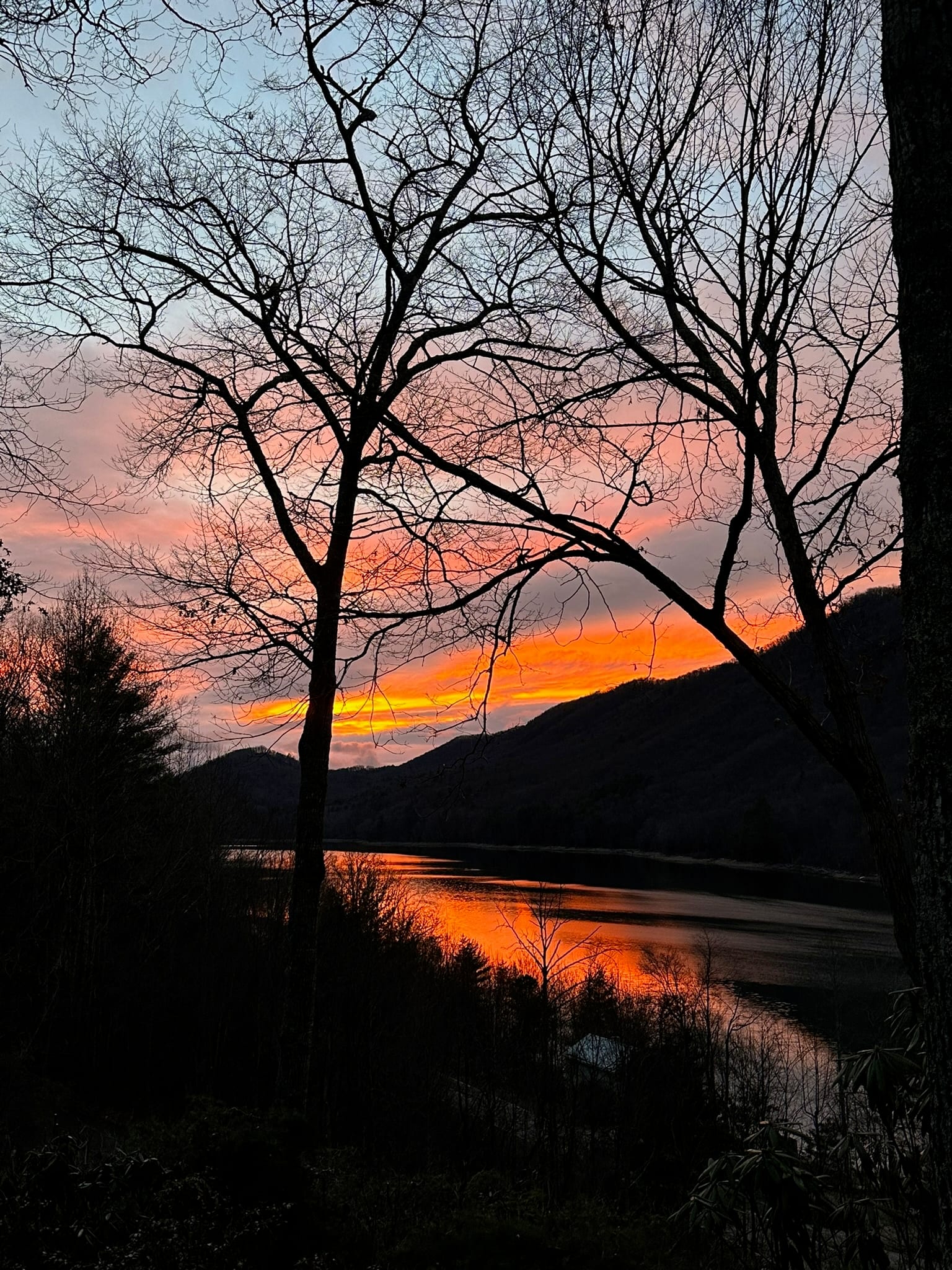
Most visitors come to Watauga Lake in summer for the boats and the water. The bald eagles know that. The eagles show up in December when the boats are gone, the water level drops, the fish are concentrating in the open lake near the dam, and the trees have lost their leaves — making the eagles much easier to spot.
If you’ve never seen a wild bald eagle and you happen to be in this part of Tennessee in winter, the Watauga Dam area is one of the best places in the southeast to do it. Here’s how to actually see one.
The eagle situation at Watauga, briefly
Bald eagles came off the federal endangered species list in 2007. The southeast Tennessee population has recovered to the point where there are now several nesting pairs in the Watauga Lake / Watauga River corridor. Add the migrating birds that winter here from points north, and the December–March population at the lake is real.
The Tennessee Wildlife Resources Agency runs an annual bald eagle survey in January. Carter County (where Watauga Lake sits) has consistently been in the top tier for eagle counts in the state. Local Audubon chapters do organized eagle-watching trips on the lake in winter.
Bottom line: this is not a “you might see an eagle if you’re lucky” situation. In December and January, around the dam, you should expect to see at least one.
When to come for eagles
December through February. Peak window. Migrating birds from Canada and the Great Lakes are here. Local birds are easy to spot because the trees are bare. Cold mornings concentrate the eagles near the open water below the dam where the fish are also concentrated.
March. Migrants start heading north. Local nesting pairs become more active around nests — sometimes you can spot adults bringing food to chicks at known nest sites. Local-only viewing.
April through October. Resident pairs only. The leaves come back and the eagles are harder to spot — they’re in the canopy, not on bare branches. You might see one but you also might not. Less reliable.
Best single visit: A clear cold morning in January. Sunny days at sub-40°F drive the eagles to hunt the open water visibly, and the bare trees mean any perched eagle is visible from a quarter mile away.
Where to actually go
Three reliable spots, in order of probability.
1. The Watauga Dam area (best)
This is where the eagles concentrate in winter. The dam holds back the lake; below the dam the river runs cold and fish-rich. Eagles park in the trees on either side and hunt the river and the open water above the dam.
Best vantage: Walk the AT across the top of the dam. The trail goes east from the parking on Wilbur Dam Road and crosses the dam itself — eagles are often perched in the trees on the south shore. Spotting downward from the dam top is easier than spotting from below because you’re above the canopy.
Alternate vantage: The TVA picnic area below the dam (off Wilbur Dam Road). You can park, sit, and scan the trees on both sides of the river. Eagles often perch in the tallest pines on the slope above the picnic area.
Time of day: Mornings (7–10 AM) and late afternoon (2–4 PM in winter, before sunset) are most active. Mid-day is often quiet — eagles rest after feeding.
Distance from the lake-area rentals: About 10 minutes by car. Easy half-day outing.
2. Shook Branch Recreation Area (second-best)
The TVA-managed swim/picnic area on the south shore between Hampton and the dam. The recreation area is closed for swimming in winter but open for walking and birding.
Best vantage: Walk west along the south-shore Appalachian Trail (the same trail that crosses the dam, picked up from a different parking lot). The first half-mile of trail from Shook Branch heads along the lake — eagles fish the cove and the main lake here.
Time of day: Morning is best. The bay catches first light, the eagles move first.
Distance from rentals: About 10 minutes.
3. Watauga Point Recreation Area (north shore)
Less popular, more remote. Sits on the north shore east end of the lake. Quieter than Shook Branch, often empty of people in winter. Eagles fish the cove here too but less reliably than the dam.
Best vantage: The parking area itself looks out over the cove. No serious walking required.
Distance from rentals: 15 minutes.
What to bring
Eagle watching isn’t a casual look-up-and-see situation. The eagles are big but they sit still for long periods.
- Binoculars. 8×42 is the sweet spot for birding. Cheap binoculars under $50 are usually frustrating; the $150-250 range from Vortex, Nikon, or Celestron is plenty for eagle viewing.
- A scope, if you have one. A spotting scope set up on the dam or at Shook Branch makes the difference between “I can tell there’s an eagle there” and “I can see the white tail feathers fluttering.” Not required but nice.
- A folding chair. Stand-still birding is hard on the legs. A camp chair lets you settle in for an hour and that’s when the eagles do something interesting.
- A thermos with hot coffee or cocoa. January mornings at the dam are 25°F. Cold hands ruin eagle photography.
- Real winter layers. The dam is exposed and the wind off the water is real. Sub-freezing breeze + standing still = you’ll get cold fast. Dress for 10°F below the actual air temperature.
- A camera with a real telephoto lens, if photography is the point. Anything below 300mm equivalent will leave the eagles too small in the frame. 400-600mm is ideal. Phone cameras don’t work for this.
- Patience. A typical eagle session has 20-40 minutes of nothing, then 60 seconds of action when an eagle hunts a fish or lifts off a perch.
What you’re actually watching for
Identifying bald eagles is easier than identifying most birds because the adult plumage is unmistakable. Things to look for:
The adult bird (4+ years old): White head, white tail, dark brown body. Wingspan 6-7 feet. Often perched on the tallest pine or oak with a clear view of the water. In flight, the white head and tail are visible from a long distance.
Immature birds: Mottled brown and white all over for the first four years. Often confused with juvenile golden eagles (which are extremely rare here) or large hawks. The bald eagle progression is striking: first year is all dark, second year has white belly, third year has some white on head, fourth year is almost adult, fifth year is full adult plumage.
Behaviors worth watching:
- Perched and motionless. They do this 80% of the time. Look at the tallest trees with broken-off tops or thick exposed branches.
- Slow circling soar. Eagles use thermals to gain altitude with minimal effort. A bald eagle in a thermal turning slow circles is one of the most distinctive winter sights on this lake.
- Hunting dives. Eagles fold their wings partly and drop fast to grab a fish from the surface with their feet. The whole motion is over in 5-10 seconds. You’ll hear nothing.
- Kleptoparasitism (food piracy). Bald eagles often steal food from ospreys. If you see two large birds chasing each other low over the water, that’s usually what’s happening.
- Vocalizations. Bald eagles don’t actually have the dramatic screeching cry of movies — that’s a red-tailed hawk dubbed in. Real bald eagle calls are a high-pitched, almost laughing series of chirps. They’re quiet birds.
Two specific outings we’d recommend
If you’re a planner, here’s how to actually do an eagle morning at Watauga.
The dam morning (90 minutes)
Drive to Wilbur Dam Road. Park at the lot on the south side of the dam. Walk the AT across the dam top — about 10 minutes one way at a slow scanning pace. Stop at the east end of the dam, sit on a rock with binoculars, and look at the trees on both shores. After 30-40 minutes, walk back. Continue past the parking lot down to the TVA picnic area below the dam. Sit there for another 30 minutes scanning the slope. Done by mid-morning.
Expected result on a January morning: at least one adult eagle visible, often 2-3. We’ve had guests count five on a single morning.
The full lake morning (3-4 hours)
Start at Shook Branch by 7:30 AM with first light. Walk the south-shore lake trail for an hour, scanning the canopy. Drive to the dam by 10 AM, do the dam-top walk. Lunch at Iron Mountain Grille in Hampton. Afternoon drive to Watauga Point on the north shore for one more session. Back to the rental by 3 PM with frozen hands and a real count of eagles seen.
Expected result: 3-6 individual eagles, possibly more.
When NOT to come for eagles
A few cautions:
- Don’t expect summer eagle viewing. They’re there but harder to find. The lake is the wrong destination if eagles are your primary goal in July.
- Don’t go in heavy rain. Eagles tuck under canopy and don’t move much. You’ll see nothing.
- Don’t expect to see them in the boat traffic. Memorial Day–Labor Day, the eagles avoid the dam end of the lake when the boats are running. Winter is quiet for a reason.
- Don’t go without checking generation schedules. TVA generation at Wilbur Dam can change quickly — when generators are running, the river below the dam rises and the eagles shift. If you’re committed to a specific spot, check tva.gov for the day’s release schedule.
Pairing eagle viewing with a stay
January and February at Watauga Lake are quiet, cheap, and beautiful in their own way. Our winter getaway piece covers the broader case for winter visits. Eagle viewing pairs especially well with:
- A ski day at Beech Mountain (35 minutes) — drive out to ski Friday, eagle morning Saturday
- A jet tub afternoon after a cold morning standing at the dam
- A long lunch at Iron Mountain Grille or Watauga Lake Winery before the late-afternoon eagle session
- A serious wildlife photographer’s setup — January is one of the only times this lake hands you golden-hour light over open water with eagles overhead
For broader birding context (eagles aren’t the only species worth watching on this lake), see our birding article. For the broader winter experience, winter getaway covers everything else.
Why winter is the season for this
Winter at Watauga Lake is the season most visitors miss. The eagles are one of the reasons the locals love it. If you’ve ever wanted to see a wild bald eagle and you’re within driving distance of east Tennessee in January or February, the dam is worth a morning.
Bring the binoculars and the thermos. We’ll keep the fire going at the house.
Want to stay at the lake?
Our modern two-bedroom townhouse has sweeping lake and mountain views, a jet tub, and a gas fire pit on the back porch.
Common questions
Are there really bald eagles at Watauga Lake?
When is the best time to see bald eagles?
Where do you go to see them?
Are they hard to spot?
More like this
Keep reading
Birding at Watauga Lake — eagles, ospreys, loons, and the spring warbler wave
A birder's guide to Watauga Lake — bald eagles, ospreys, winter loons, wood ducks, and the spring wa
A winter getaway at Watauga Lake
Why winter at Watauga Lake is underrated — quiet water, open views, easy ski access at Beech and Sug
Christmas week at Watauga Lake
A practical guide to Christmas week at Watauga Lake. What is open Christmas Day, where to find a tre
Cherokee National Forest from Watauga Lake
Watauga Lake sits inside the Cherokee National Forest, which is most of why the shoreline is undeveloped and the water is so clear.