
Spring at Watauga Lake — a month-by-month walk-through
What spring is like at Watauga Lake from March through May — wildflowers, water temperature, the fishing transition, wineries opening, and AT hiker season.
By Karen · May 11, 2026
On this page
Bill talks about fall. Everybody talks about fall. Fall is the obvious season here, the one that fills the calendar a year out, and it earns the attention.
I want to write about spring.
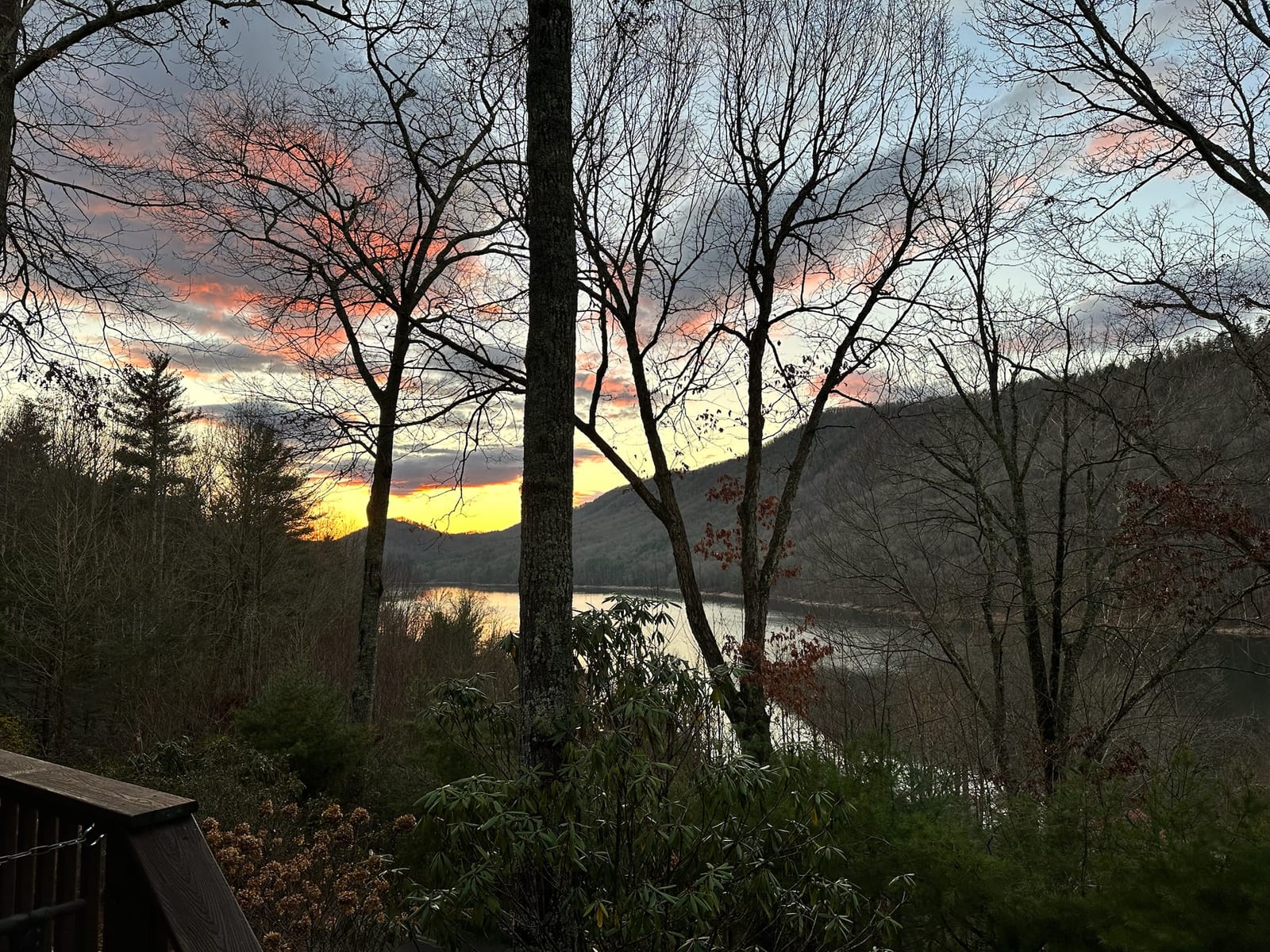
Spring is the quiet season at the lake, and the one most outside visitors forget about. The water is too cold for swimming, the colors are not yet the postcard, and most people who have not been here are still picturing it in summer mode. Which means in March, April, and most of May, you can have a stretch of shoreline to yourself for a whole afternoon and pass three cars on a five-mile drive through the Cherokee National Forest. That is the trade.
I have lived through four springs here now since Bill and I moved up from Florida, and each one has surprised me in a different way. Here is what to actually expect.
March — late winter pretending to be spring
March is the cruelest month, as somebody said, and at this elevation it earns the title. The lake is still cold. The trees are still bare. There are still patches of snow on the north-facing slopes above 3,000 feet. Some mornings the lake has a thin skin of ice in the protected coves, and the wind off the water in the afternoon will go straight through a fleece.
But.
By the third week of March the bloodroot starts appearing on the south-facing slopes. Bloodroot is the first real wildflower of the year here, and the way it works is wonderful — the leaf comes up wrapped tightly around the flower bud, like a little cape, and unfolds once the flower has opened. You will find them on the trail to the AT crossing at the dam, along the road leading up to Watauga Point, and on the bank behind the Mercantile. Look down. They are tiny. Most people walk past them.
Trout lilies come around the same time, lower to the ground, with mottled leaves that look like brook trout skin (hence the name). Hepatica too — pale lavender flowers on fuzzy stems, sometimes pushing through old snow.
The birds are starting to come back. Wood thrushes are not here yet, but the first warblers — yellow-rumped, palm — show up around the third week of March. The eagles that nest on the lake are already on eggs by early March, and if you know where the nest is, you can sit at a distance with binoculars and watch the parents trading shifts.
Water temperature in March: 43 to 50 degrees. Not for swimming. But that 43-to-50 range is the trigger for the walleye to start moving up into the tributaries. The Watauga and Elk rivers fill with spawning walleye in March, and the local fishermen know it. If you have a guide booked, March is the month for walleye. The regulations restrict you to single-hook lures during the spawn, which is the TWRA’s way of keeping the fishery healthy. Follow them.
What to do in March: bring layers, take long walks, go look at the bloodroot, drink coffee on the porch in a heavy sweater, do not plan on swimming. Book a fishing guide if walleye is your thing.
What is not open yet in March: most of the food trucks, most of the seasonal shops, the winery on Mondays through Wednesdays. The Mercantile is open all year and is your reliable lunch spot.
April — the lake wakes up
April is when it becomes obvious that spring is real. The bloodroot is finishing by the first week. The trillium is peaking by the middle of the month.
Trillium is the showstopper. We have several species in this part of the southern Appalachians, and they bloom in waves through April. The big white trillium (Trillium grandiflorum) is the one most people picture — three petals, three leaves, sometimes a foot tall, white at first and aging to pink. They carpet entire hillsides in the right woods. The trail to Laurel Falls below the lake (in the Pond Mountain Wilderness) is a trillium corridor in mid-April. So is the lower part of the Pond Mountain trail. So is the AT north of the dam.
By the third week of April you also get yellow lady’s slipper orchids in scattered patches. They are uncommon enough that finding one is a small event. Pink lady’s slippers come later — those are May.
The dogwoods bloom in mid-to-late April. The forest at this elevation goes from gray-and-brown to white-flecked-green in about ten days. The redbud comes a week or two before the dogwood, and the combination — purple-pink redbud against the still-bare hardwoods, then white dogwood as the leaves are coming in — is the kind of thing that makes you stop the car on the side of US-321 and just look.
The lake is still cold in April. Water temperature climbs from the high 40s to the high 50s through the month. Smallmouth bass start to think about spawning when the water hits 55, which usually happens in the last week of April or the first week of May. The fishing transitions from a tributary game (walleye in March) to a main-lake game (smallmouth and largemouth in late April and through May).
The migratory songbirds arrive in waves. Wood thrushes come back the first week of April, and their flute-like song fills the woods at dusk. The warblers come in the middle of the month — black-throated green, hooded, ovenbird, scarlet tanager, rose-breasted grosbeak. If you are a birder, mid-April through mid-May at Watauga Lake is as good as it gets in this corner of Tennessee. The Watauga Point Picnic Area is a known spot. So is Rat Branch Boat Launch.
April is also the month the AT thru-hikers show up. The northbound thru-hike season starts in March in Georgia, and the main bubble of NOBO hikers reaches the Watauga Lake stretch from mid-April through late May. They come down off Pond Mountain, walk across the dam, refuel at Kincora Hostel in Hampton or at the Mercantile, and continue north toward Damascus, Virginia. You will see them on the trail, in the parking lot of the Mercantile buying sandwiches, sometimes hitchhiking on US-321. Most are easy to spot — sun-burned, wearing the same shirt for the third week, the smell precedes them slightly. They are some of the most interesting people you will ever meet. If you offer one a ride, do it. If you buy one a coffee at the Mercantile, do that too. The trail community calls it trail magic, and it is real.
What to do in April: hike for wildflowers, watch for migrating warblers, book a fishing guide if smallmouth is your thing, sit on the porch in the late afternoon when it actually gets warm. The first week of April is still cold most years. By the last week, you might be in a t-shirt at midday.
The winery transitions to its summer hours on May 1, but by mid-April it is open most weekends and the patio gets some sun. Worth a Saturday afternoon visit.
May — the lake comes alive
May is when everything that has been gradual through March and April happens at once. The wildflowers shift from the low-growing spring ephemerals to the upright early-summer flowers — mountain laurel, flame azalea, rhododendron. The migratory birds settle into nesting territories and start singing in earnest. The water warms up enough for the first brave swimmers. The leaves on the hardwoods fill in.
This is also when the high country wildflowers peak. Roan Mountain is about 4,000 feet above the lake, and it runs about three weeks behind us in spring timing. Bloodroot on Roan blooms in late April. Trillium peaks on Roan in the first two weeks of May. Carvers Gap is a wildflower destination in mid-May — pink lady’s slippers, flame azalea on the balds, painted trillium in the spruce-fir forest just below the summit. The Rhododendron Festival at Roan Mountain State Park happens in mid to late June, but the flame azalea peaks in the third week of May, and that show is worth its own trip.
Water temperature in May: climbing from the high 50s to the mid-60s. The first weekend of May you might find a teenager jumping off a dock. By Memorial Day weekend, the brave kayakers are taking dips between paddles. Real swimming weather is still a few weeks out, but the lake is no longer cold-shock territory.
The smallmouth fishing peaks in May. The bass are on beds in the first half of the month, and the topwater bite gets going by the second half. If you have ever wanted to try smallmouth fishing, this is the window.
The AT bubble is still passing through, especially in the first three weeks of May. By the last week of May the main pulse has moved north into Virginia, but you will still see hikers all summer.
The winery is in full swing by May. Watauga Lake Winery opens up to its summer hours — Monday through Saturday 11 to 6, Sundays noon to 6. They sometimes have food trucks on the weekends, and live music on a Saturday or two. The drive out is part of the experience — winding county road through farmland.
The Mercantile starts to feel busy. Other seasonal places open up. The marinas have all their rental boats in the water by Memorial Day. The lake is no longer ours alone, but it is also not yet summer-crowded.
What spring offers that summer does not
Summer at Watauga Lake is wonderful, and it is also when most people come. The water is warm, the boats are out, the marinas are full. If you want the classic lake vacation, summer is the season.
Spring offers something different. It offers a forest that is changing every week. A lake you can sit beside without seeing another person. Birdsong that is at its loudest because the birds are establishing territories. Wildflowers that the summer guests will never see. Cool nights on the porch with a fire still appropriate. The thru-hikers passing through, full of stories. The fishing guide who has time for you because the calendar is not full. The wineries with empty patios on Tuesday afternoons. The drive up to Roan Mountain in flame azalea peak with nobody else on the road.
It is also the cheapest season at most rentals, ours included. The fall rates kick in around the end of September. The summer rates kick in around Memorial Day. March, April, and the first three weeks of May are off-peak. If you have flexibility, this is your value window.
A practical packing note for spring
We tell guests: bring layers, plan for one cold rainy day, and do not pack for the lake of your imagination.
- A real rain jacket. Spring is the wettest season in the southern Appalachians, and an April afternoon thunderstorm is not a gentle thing.
- A fleece or sweater for evenings, even in May. Once the sun drops behind the mountains, the temperature drops fast.
- Hiking shoes. Spring is hike season. Save the flip-flops for July.
- Binoculars, if you have them. The bird life is wasted without them.
- A wildflower book or app. iNaturalist is free and works offline if you cache the area.
- Sunscreen. The sun reflecting off the lake in May is stronger than people expect.
- Bug spray, but only by mid-May. March and April are too cold for the bugs.
- A swimsuit, just in case. There is always one kid who decides to go in regardless of the temperature.
When to come
If you have one week to spend at Watauga Lake in spring, our recommendation is the third week of April. The dogwoods are in. The trillium is peaking at lake elevation. The first warblers are singing. The fishing is transitioning to smallmouth. The thru-hikers are coming through in numbers. The weather is most reliable.
If you are flexible and want fewer people, try the first week of April. Quieter, with less reliable weather but real wildflowers and almost no other visitors.
If you want the high-country show, come in mid-May for the Roan Mountain wildflower peak. Combine the lake at lower-elevation early summer with a drive up to Roan for the flame azalea.
Whatever week you pick, spring at Watauga Lake will reward you. It is the season most people miss. It is the season we love most. That is the trade-off, and we are willing to keep the secret if you are.
Want to stay at the lake?
Our modern two-bedroom townhouse has sweeping lake and mountain views, a jet tub, and a gas fire pit on the back porch.
Common questions
When is the water warm enough to swim?
When do wildflowers peak?
Is the AT crowded with thru-hikers in spring?
Are the wineries open?
More like this
Keep reading
Fall foliage at Watauga Lake — when, where, and what nobody tells you
When fall color peaks at Watauga Lake, which drives and trails are the best for it, and the timing t
A real fishing guide to Watauga Lake
A working guide to fishing Watauga Lake — species, seasons, where to launch, what to throw, and whic
Where to stay on Watauga Lake
A practical look at where to stay around Watauga Lake — the lakefront cabins, the hilltop townhouses
The Appalachian Trail at Watauga Lake
The AT crosses on top of Watauga Dam — a 15-minute drive from the door, with one of the most photographed views on the entire 2,200-mile trail.
Cherokee National Forest from Watauga Lake
Watauga Lake sits inside the Cherokee National Forest, which is most of why the shoreline is undeveloped and the water is so clear.
Wineries near Watauga Lake
Two genuine vineyards within ten minutes — Villa Nove Vineyards (5 min) and Watauga Lake Winery (10 min). Both pour, both have lake-adjacent patios, both are worth an afternoon.